

2026-09-13
How Solar, Battery Storage, and EV Charging Work Together in a More Energy-Efficient Home
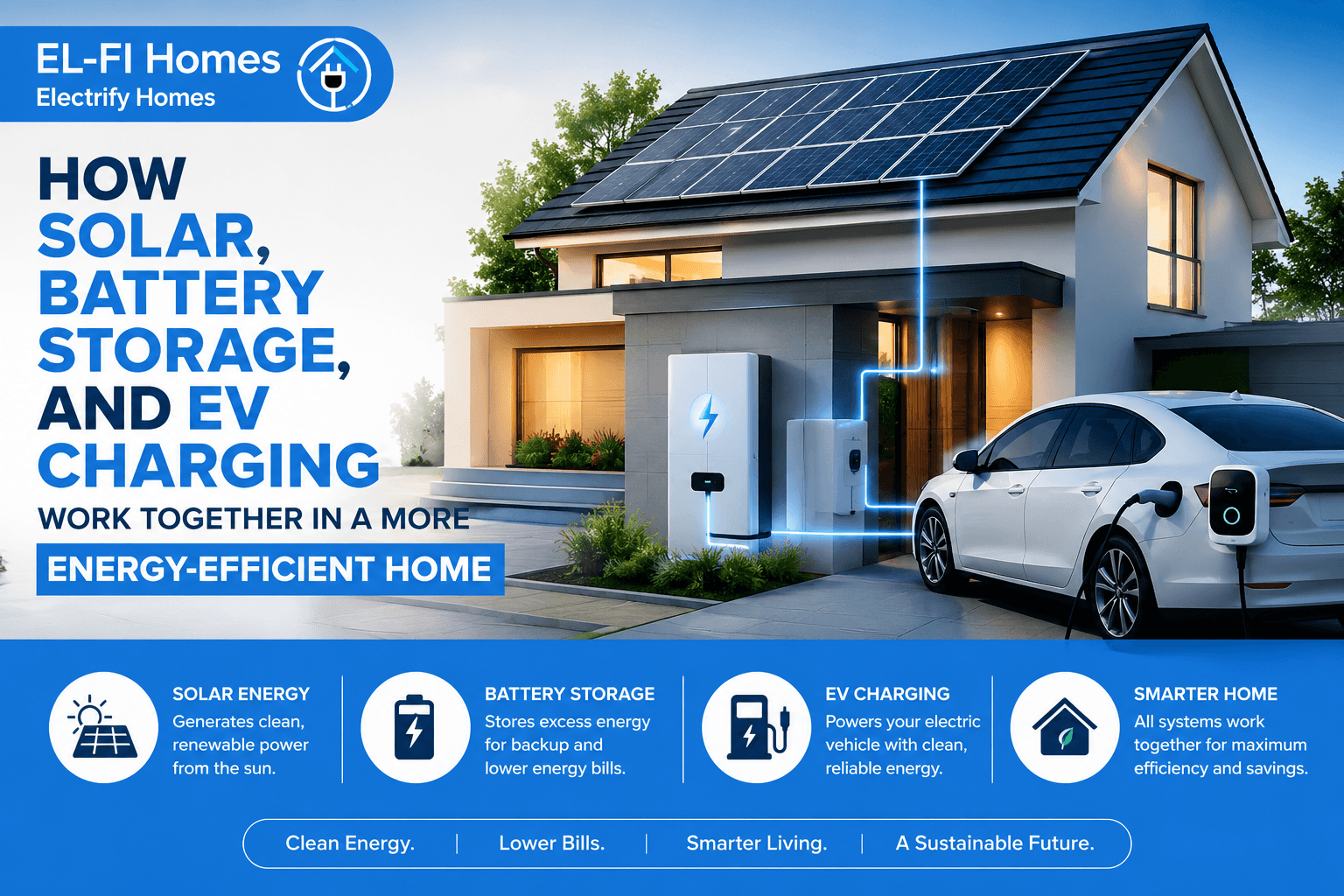
Electric vehicles are becoming an increasingly common part of household transportation. Having a dedicated home charger can make charging more convenient because homeowners can charge their vehicles at home instead of relying entirely on public charging stations.
A Level 2 charger operates at 240 volts and can provide substantially faster charging than a standard 120-volt household outlet. Most EV owners can charge overnight using an appropriately installed Level 2 system.
For homeowners considering Level 2 EV charger installation Irvine, electrical capacity should be evaluated before installation. The charger requires a dedicated circuit, and its electrical demand needs to be considered alongside the home's existing appliances and planned upgrades.
Solar can make the overall EV charging strategy even more appealing. Rather than viewing an EV simply as another source of household electricity consumption, homeowners can consider how solar generation and charging schedules fit together as part of a larger energy plan.
Electrical Capacity Matters When Combining Systems
Adding solar, battery storage, and EV charging can increase the electrical demands placed on a home. That does not automatically mean an electrical panel must be replaced. Instead, the home's existing equipment, available breaker space, service rating, condition, and calculated electrical load should be evaluated.
This is particularly important for older homes or properties that are already operating close to their available electrical capacity.
For homeowners considering a Main panel upgrade Mission Viejo, a professional electrical evaluation can help determine whether an upgrade is actually necessary. Depending on the calculated load and existing equipment, the appropriate solution may involve a panel upgrade, additional circuit planning, or another electrical configuration.
Planning these requirements before installation can also help homeowners avoid designing one system without considering future additions.
Planning the Three Systems Together
The greatest benefit of combining solar, battery storage, and EV charging comes from looking at the home as one connected energy system.
Solar can provide on-site electricity generation. Battery storage can provide additional flexibility for when that energy is used. EV charging can use electricity to support daily transportation needs. Together, these technologies can help homeowners move toward a more electrified and energy-conscious property.
A coordinated plan also makes it easier to consider future improvements. A homeowner may start with solar and later add battery storage or an EV charger. Alternatively, several upgrades may be planned during the same project. Reviewing the electrical infrastructure early helps ensure that future additions are considered during the initial design.
A Smarter Approach to Home Electrification
Home electrification is not simply about adding individual technologies. It is about understanding how different electrical systems interact and designing them around the home's actual energy requirements.
EL-FI Homes provides solar, battery storage, EV charging, heat pump, and electrical services that can be evaluated as part of a broader home electrification plan. By considering energy generation, storage, vehicle charging, and electrical capacity together, homeowners can make more informed decisions about their property's energy future.
Whether you are starting with solar panels, preparing for an electric vehicle, or planning several upgrades at once, the right approach begins with understanding your home's current electrical system and future energy needs. A coordinated plan can make each upgrade work more effectively as part of a more efficient, flexible, and modern home.