

2026-09-13
5 Home Electrification Upgrades to Consider for Your Southern California Home
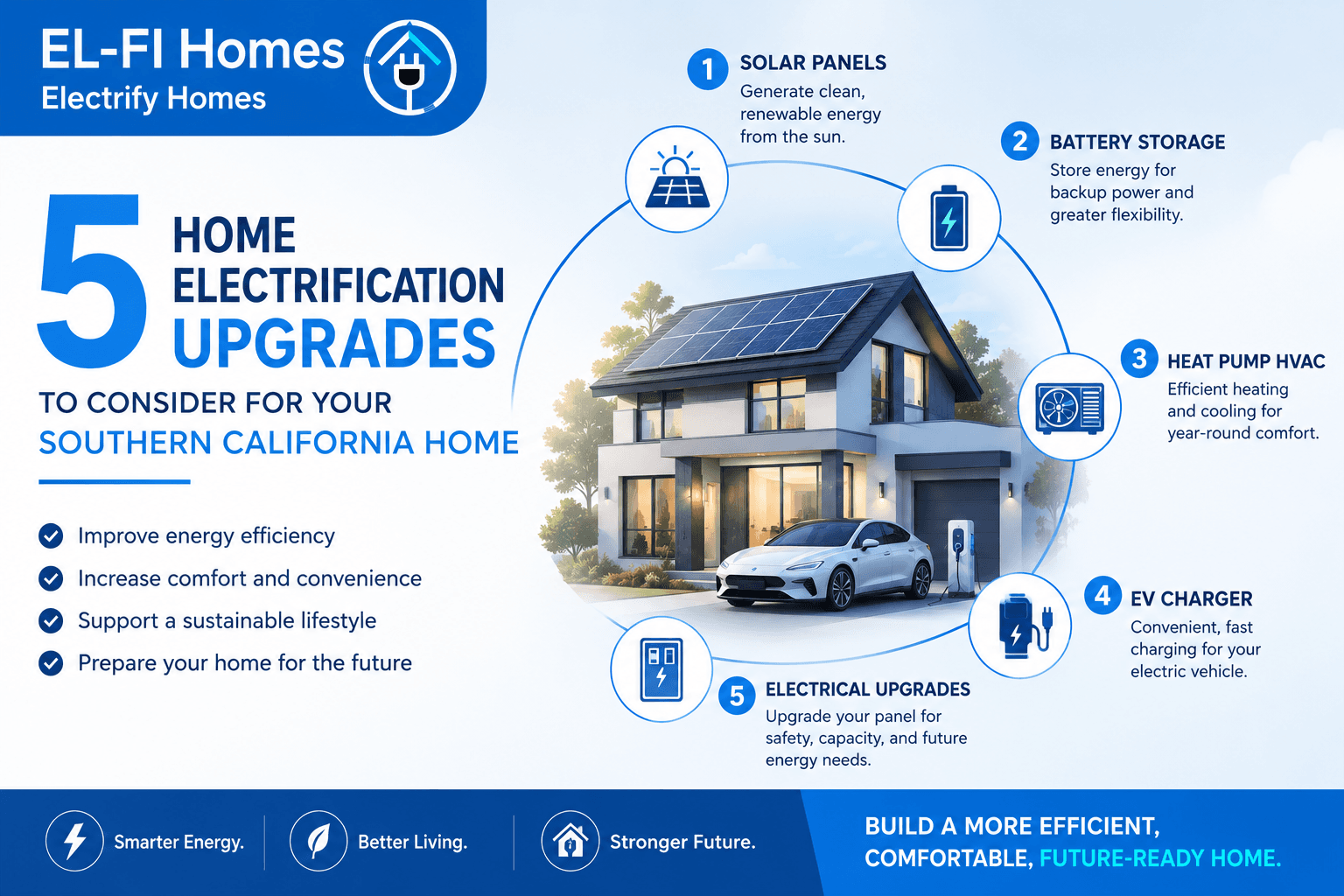
Southern California homeowners are increasingly looking for practical ways to make their homes more energy efficient, comfortable, and prepared for future energy needs. Home electrification offers a way to modernize important household systems by using efficient electric technologies for heating, transportation, energy generation, and other everyday needs.
Electrification is not limited to one particular upgrade. Depending on the property, homeowners may consider solar panels, battery storage, electric vehicle charging, heat pump systems, and electrical infrastructure improvements. Planning these systems together can help create a more connected and efficient home.
Here are five home electrification upgrades worth considering for your Southern California property.
1. Install a Solar Energy System
Solar panels are one of the most recognizable home electrification upgrades. A properly designed solar energy system can generate electricity from sunlight and help power household appliances and other electrical equipment.
As homeowners add more electric systems to their properties, generating electricity on-site can become an important part of their overall energy strategy. Solar can support household electrical consumption while also complementing other upgrades such as battery storage and EV charging.
When evaluating a solar installation, homeowners should consider roof condition, available space, shading, energy consumption, and potential future electrical loads. Planning for future needs can help ensure that the system is appropriately designed.
If you are considering solar for your property, working with a qualified Solar company Irvine can help you understand your home's solar potential and determine what type of system may be appropriate.
2. Add Battery Energy Storage
Solar panels generate electricity when sunlight is available, but energy consumption can continue throughout the day and evening. Battery storage provides a way to store available electricity and use it later, depending on the system configuration.
For example, solar production may be higher during the afternoon while household electricity demand increases later in the day. A battery can provide additional flexibility by storing energy generated earlier and making it available when needed.
Battery storage can also be considered as part of a backup power strategy. The appropriate system depends on the home's electrical configuration, the equipment being supported, and the homeowner's energy priorities.
Combining solar and battery storage can provide homeowners with a more comprehensive approach to managing electricity.
3. Upgrade to Efficient Heat Pump HVAC
Heating and cooling can represent a significant portion of household energy use. Heat pump technology provides an electric option for both heating and cooling and can be an important component of a home electrification plan.
A properly sized heat pump can provide consistent indoor comfort while supporting the transition toward an increasingly electric home. However, selecting the right system requires more than simply choosing equipment based on its capacity.
Home size, insulation, ductwork, existing HVAC infrastructure, indoor comfort requirements, and local climate conditions should all be considered.
A professional evaluation can help determine whether a heat pump is appropriate and identify any improvements that may be needed for proper installation and performance.
4. Install a Home EV Charging System
Electric vehicles are another major part of the home electrification movement. Having a dedicated charging station at home can make EV ownership more convenient by allowing homeowners to charge their vehicles where they live.
Level 2 charging is a popular option for homeowners because it operates at 240 volts and generally provides faster charging than a standard household outlet.
Homeowners looking for the fastest home EV charging station in Irvine should consider more than charging speed alone. The home's electrical capacity, charger specifications, wiring, dedicated circuit requirements, and vehicle compatibility all need to be evaluated.
An appropriately installed charging system can become part of a larger home energy plan, especially when paired with solar generation and battery storage.
5. Consider an Electrical Panel Upgrade
The electrical panel is a critical component of a home's energy infrastructure. It distributes electricity to different circuits and must have sufficient capacity for the property's electrical loads.
When homeowners add solar, EV charging, heat pumps, battery storage, or other high-demand electrical equipment, the existing panel may need to be evaluated.
Older electrical panels may have limited capacity or insufficient breaker space for planned upgrades. In some cases, an electrical panel upgrade may be necessary to safely support new equipment.
An electrical assessment can help determine whether the existing panel is suitable for the planned electrification improvements. It can also identify potential electrical issues before new equipment is installed.
Planning Your Electrification Upgrades
One of the most important aspects of home electrification is planning. Installing several electrical systems independently without considering how they interact can create unnecessary challenges.
Instead, homeowners can evaluate their current energy consumption and consider future plans. For example, someone installing solar today may also want to add an EV charger or battery storage later. Designing the electrical infrastructure with those possibilities in mind can make future improvements easier to integrate.
At EL-FI Homes, we approach home electrification with the goal of creating solutions that account for the entire property. Solar, battery storage, EV charging, HVAC systems, and electrical upgrades can all play a role in developing a more efficient and flexible home.
Build a More Efficient Southern California Home
Home electrification can be approached one upgrade at a time or as part of a comprehensive long-term plan. Solar panels can provide on-site energy generation, batteries can add energy storage, heat pumps can provide efficient heating and cooling, EV chargers can support electric transportation, and electrical upgrades can help provide the infrastructure needed to support new technology.
EL-FI Homes helps homeowners evaluate these options based on their property's existing systems and future energy goals. With thoughtful planning and professional installation, electrification upgrades can help create a comfortable, modern, and adaptable home for years to come.