

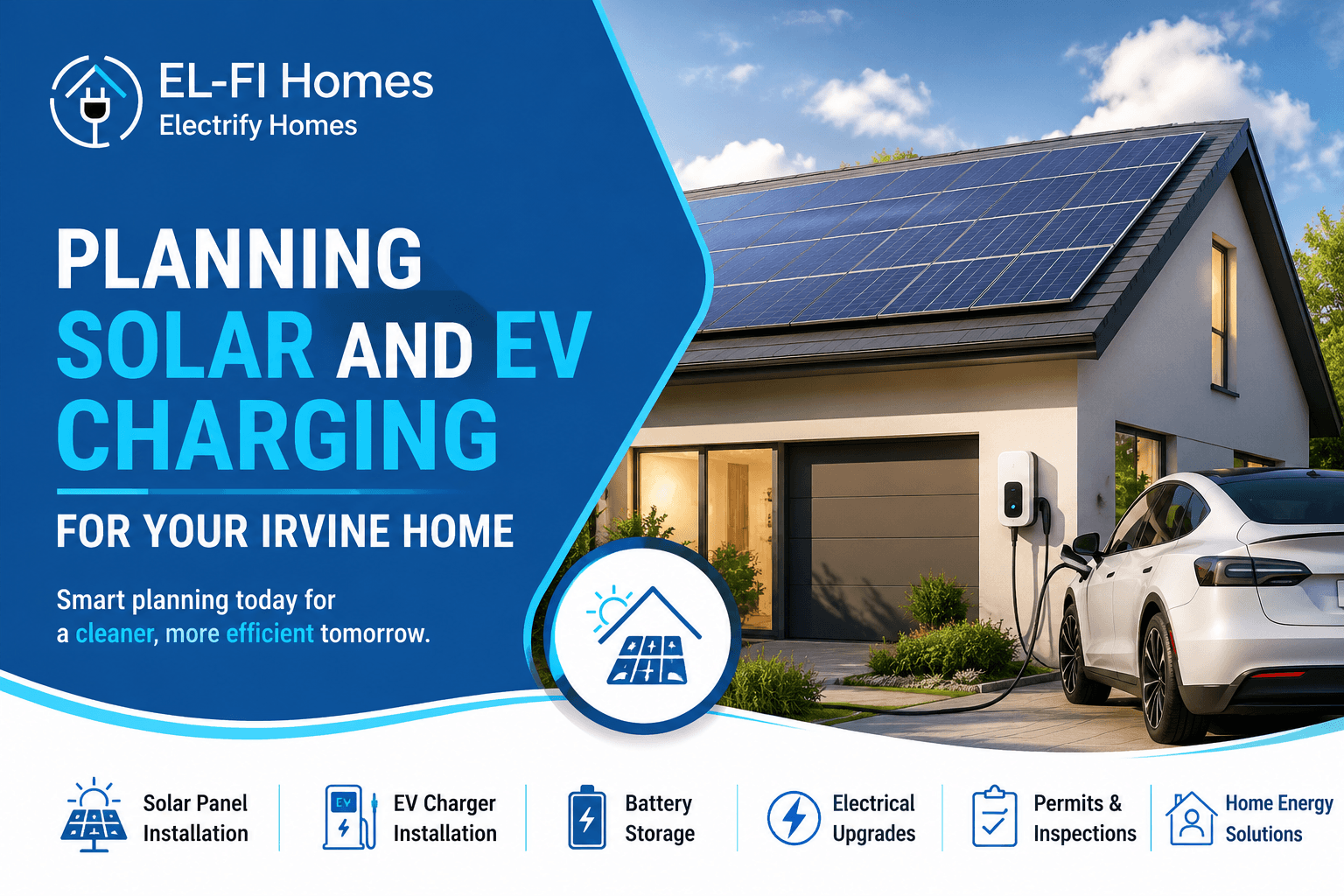
For Irvine homeowners, going solar is not simply about choosing panels and putting them on the roof. Electricity usage, Southern California Edison rates, roof conditions, electrical capacity, and future plans for an EV or other electric equipment can all affect the right system design.
At EL-FI Homes, we evaluate these factors together. If you are considering solar panel installation in Irvine, understanding your home's current and future energy needs is a better starting point than choosing equipment based on price alone.
Start With Your Electricity Use
Your utility bills provide an important starting point for solar planning. Irvine homeowners are generally served by Southern California Edison, so understanding how and when electricity is consumed can help inform system design and financial expectations.
Review Your Recent Usage
Before meeting with an installer, gather:
-
Recent electricity bills, preferably covering a full year
-
Monthly electricity consumption
-
Major seasonal changes in usage
-
Existing electric appliances and equipment
-
Plans to add an EV, battery, heat pump, or other electric loads
Time-of-use pricing can make the timing of electricity consumption relevant to the economics of solar and storage. The right evaluation should therefore consider your actual usage rather than relying on a generic savings estimate.
Evaluate the Home Before Choosing Equipment
A solar system needs to work with the property as it exists.
At EL-FI Homes, our evaluation considers factors such as:
-
Available roof area
-
Roof condition
-
Roof orientation and shading
-
Existing electrical service
-
Electrical-panel capacity
-
Equipment placement
-
Planned future electrical loads
A panel upgrade is not automatically required for every solar project. It depends on the home's existing electrical system and the proposed equipment.
For solar panel installation in Irvine, these details should be established before the final system design is approved.
Consider Future Electrical Loads
Your energy requirements may change after the solar installation.
For example, you may later add:
-
An electric vehicle
-
A Level 2 EV charger
-
Battery storage
-
A heat-pump HVAC system
-
An electric water heater
-
Other high-demand electrical equipment
Discussing these plans early can help prevent today's solar design from overlooking tomorrow's electrical needs.
Understand Irvine's Solar Process
Solar installation involves more than mounting equipment on a roof. Engineering, permitting, inspection, and utility interconnection are also part of the process.
For projects we handle, EL-FI Homes coordinates the applicable stages, including:
-
Initial consultation and energy-use review
-
Property and electrical evaluation
-
System design and engineering
-
Permit preparation and submission
-
Installation
-
Required inspection
-
Utility interconnection
-
Permission to Operate and system activation
For Irvine projects, the applicable utility-interconnection process involves Southern California Edison when the property is served by SCE.
Ask Who Handles the Paperwork
Before signing a contract, confirm who is responsible for:
-
City permitting
-
Engineering documents
-
Inspection coordination
-
Utility-interconnection applications
-
Communication during the approval process
-
Final system activation
EL-FI Homes holds C46 Solar and C10 Electrical licenses, allowing solar and electrical considerations to be addressed within the same project. EL-FI also holds a C20 HVAC classification for applicable HVAC work.
Planning for an EV?
An EV can become a significant new electrical load for a home. If you already own an EV or expect to purchase one, include that information when discussing your solar project.
What to Consider for EV Charging
For EV charger installation in Irvine, an evaluation should consider:
-
Vehicle charging requirements
-
Charger type and electrical requirements
-
Existing panel capacity
-
Available breaker space
-
Charger location
-
Distance between the panel and charger
-
Electrical service capacity
-
Future electrical equipment
A Level 2 charger uses a 240-volt circuit and can charge an EV substantially faster than a standard 120-volt household outlet. The appropriate installation, however, depends on the property and equipment.
The City of Irvine also identifies electrical permitting requirements for qualifying residential EV charging installations. The electrical service must be appropriately sized for the proposed equipment.
Solar and EV Charging Can Be Planned Together
Solar and EV charging do not need to be treated as completely separate projects.
When evaluating EV charger installation alongside solar, consider how the two systems fit with the home's existing electrical infrastructure.
A Coordinated Evaluation Can Address
-
Current electricity consumption
-
Solar production goals
-
EV charging requirements
-
Electrical-panel capacity
-
Battery-storage plans
-
Future HVAC electrification
-
Potential electrical upgrades
This does not mean every homeowner needs solar, a battery, or a panel upgrade. It means those decisions can be evaluated together rather than making one upgrade without considering the others.
Look at the Complete Solar Proposal
When comparing proposals for solar panel installation, the lowest upfront price does not necessarily represent the best comparison.
Ask for These Details
A useful proposal should clearly identify:
-
Proposed system size
-
Expected production
-
Panel and inverter models
-
Equipment warranties
-
Roof and shading assumptions
-
Electrical requirements
-
Permitting responsibilities
-
Utility-interconnection responsibilities
-
Battery options, if relevant
-
Financing terms, if applicable
Also ask what assumptions were used for production and savings estimates. Utility rates, incentives, financing terms, and program requirements can change, so estimates should not be treated as guaranteed results.
What Our Experience Looks Like
EL-FI Homes approaches solar as part of a broader home-electrification strategy.
Our project portfolio includes a residential 5.74 kW system with 14 REC Alpha 410 W panels and a Growatt 6 kW inverter. Equipment selection is based on the requirements of the individual property rather than assuming that one configuration fits every home.
Our capabilities also extend beyond solar. EL-FI Homes can evaluate electrical work, batteries, EV charging, and HVAC considerations as part of a broader home-energy plan.
Use Your Consultation Productively
Before your consultation, prepare:
-
Your recent utility bills
-
Your current electrical equipment list
-
EV information, if applicable
-
Planned home improvements
-
Questions about batteries or backup power
-
Questions about financing or incentives
This gives the installer more useful information for evaluating the project.
Choose a Solar Plan Based on Your Home
The right solar panel installation depends on more than the number of panels that can fit on your roof. Your electricity consumption, utility structure, electrical service, property characteristics, and future energy plans all matter.
If you are also considering EV charger installation in Irvine, mention it at the beginning of the solar conversation. Understanding both electrical loads can help create a more coordinated plan.
At EL-FI Homes, our goal is to give Irvine homeowners clear information and a system designed around their property rather than a generic package. If you are ready to explore solar panel installation in Irvine, contact EL-FI Homes to discuss your electricity use, property, and future energy plans.
FAQs
1. Does every Irvine home need an electrical-panel upgrade for solar or EV charging?
No. The existing electrical service should be evaluated based on the proposed equipment and the home's current and planned electrical loads. For EV charger installation in Irvine, EL-FI Homes evaluates factors such as service capacity, panel configuration, available breaker space, and charger requirements before determining whether an upgrade is appropriate.
2. Can I install solar and an EV charger together?
Yes. Planning EV charger installation in Irvine at the same time as solar allows the electrical requirements of both systems to be considered together. This can be particularly useful if you are also considering battery storage, a heat pump, or other home-electrification projects.
3. How should I prepare for solar installation in Irvine?
Start by gathering your recent electricity bills and identifying any major electrical upgrades you expect to make. During your consultation for solar panel installation in Irvine, discuss your current electricity consumption, existing electrical service, EV plans, battery-storage interests, and future electrification projects so the system can be designed around your home's needs.