

2026-09-13
A Complete Guide to Home Electrification in Southern California
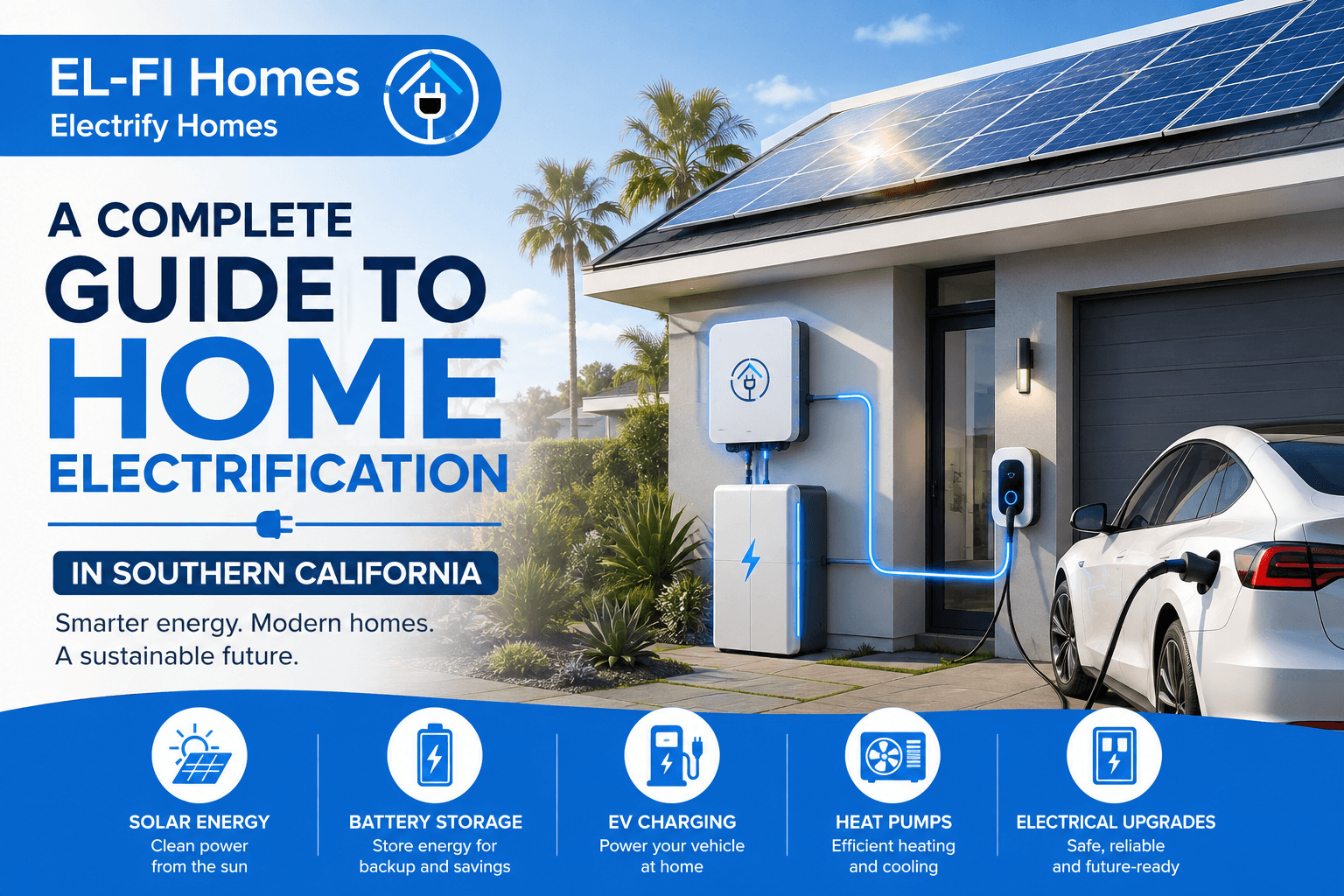
Home electrification is becoming an important consideration for homeowners across Southern California. As more households transition to electric appliances, electric vehicles, solar energy, and battery storage, having a well-planned electrical system is increasingly important. Home electrification can improve energy efficiency while helping homeowners create a property that is prepared for changing energy needs.
From upgrading electrical infrastructure to installing efficient heating and cooling systems, electrification involves several connected components. Understanding how these upgrades work together can help homeowners make informed decisions for their properties.
What Is Home Electrification?
Home electrification involves replacing or supplementing systems that traditionally rely on other energy sources with efficient electric alternatives. This can include heating and cooling equipment, water heating, cooking appliances, EV charging, solar panels, and battery storage.
The goal is not simply to install individual electrical products. A successful electrification plan considers the home's existing electrical capacity, current energy consumption, future requirements, and the types of equipment the homeowner wants to add.
Because every property is different, professional planning is important. Older homes may require electrical improvements before additional equipment can be installed, while newer homes may already have sufficient capacity for several electrification technologies.
Why Electrical Capacity Matters
One of the first considerations in a home electrification project is the electrical panel. The panel distributes electricity throughout the property, and its capacity must be appropriate for the home's electrical loads.
Homeowners planning multiple upgrades may need to evaluate whether their existing panel can accommodate additional equipment. This can become particularly important when adding an EV charger, heat pump, solar system, or other high-demand electrical appliances.
An electrical panel upgrade in Orange County may be recommended when the existing panel lacks sufficient capacity, has limited breaker space, or is not suitable for planned electrical improvements. A professional assessment can determine the appropriate solution based on the property's electrical requirements.
Upgrading the panel can also provide a stronger foundation for future electrification projects. Instead of addressing electrical limitations separately with every new installation, homeowners can consider their longer-term energy plans from the beginning.
Efficient Heating and Cooling
Heating and cooling are significant parts of household energy use. Modern electric heat pump systems can provide both heating and cooling while offering homeowners another opportunity to move toward an electrified home.
Choosing the right equipment requires consideration of the property's size, layout, insulation, existing ductwork, and comfort requirements. Proper sizing is important because an HVAC system that is too large or too small may not operate as efficiently or provide consistent comfort.
Homeowners looking for an HVAC contractor Orange County should consider professionals who can evaluate the entire heating and cooling system rather than focusing only on equipment replacement.
A properly planned HVAC upgrade can become an important part of a broader electrification strategy. When combined with solar energy and other electrical improvements, efficient heating and cooling can contribute to a more coordinated home energy system.
Solar Energy and Home Electrification
Solar panels can complement home electrification by generating electricity directly from sunlight. As a home becomes more dependent on electrical systems, producing electricity on-site can become an important part of the overall energy strategy.
Solar system design should account for household electricity consumption, available roof space, shading, system orientation, and future electrical loads. If a homeowner plans to add an EV charger or electric heating and cooling equipment, those future requirements can be considered during the planning process.
This integrated approach can help ensure that a solar system is designed around the home's broader energy needs rather than only its current electricity consumption.
Battery Storage Adds Flexibility
Battery storage can provide additional flexibility by storing electricity for later use. When paired with solar, a battery can store available solar energy and make that energy available when solar production is lower, depending on the system configuration.
Battery storage can also form part of a home backup strategy. The appropriate setup depends on the homeowner's priorities, electrical system, and the loads they want to support.
For homeowners considering several electrification upgrades, evaluating battery storage alongside solar and electrical infrastructure can help create a more complete energy plan.
Preparing for Electric Vehicles
Electric vehicles are another important part of home electrification. Installing a dedicated EV charger can make daily vehicle charging more convenient and allow homeowners to incorporate transportation into their overall energy strategy.
Before installing an EV charger, the property's electrical capacity should be evaluated. The charger adds another electrical load, so its requirements need to be considered alongside existing appliances and planned upgrades.
This is another reason why evaluating the electrical panel early can be valuable for homeowners planning a comprehensive electrification project.
Creating a Connected Electrification Plan
The most effective approach to home electrification is to consider individual upgrades as parts of one larger system. Solar panels can generate electricity, battery storage can provide energy flexibility, efficient HVAC equipment can reduce the energy required for heating and cooling, and EV charging can support electric transportation.
Electrical infrastructure connects these technologies. Ensuring that the home's panel and wiring are suitable for current and future loads can make the entire project more practical.
At EL-FI Homes, homeowners can explore electrical, solar, HVAC, battery storage, and EV-related solutions as part of a broader electrification plan. This coordinated approach helps homeowners understand how individual improvements can work together.
Start Planning Your Electrified Home
Home electrification is a long-term investment in the way a property produces, uses, and manages energy. Whether you are planning one upgrade or several, starting with an assessment of your home's existing systems can help identify priorities and potential electrical requirements.
EL-FI Homes helps Southern California homeowners approach electrification with consideration for both current needs and future improvements. From electrical upgrades and HVAC solutions to solar and energy storage, each component can be evaluated as part of a connected home energy strategy.
With the right planning, homeowners can create a more efficient, comfortable, and adaptable property that is better prepared for an increasingly electric future.